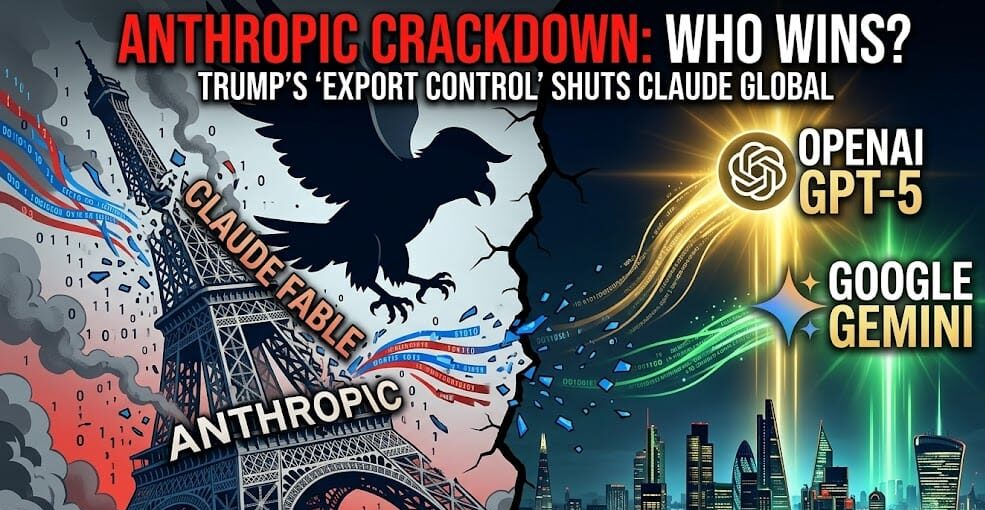
The global artificial intelligence ecosystem was just hit by a regulatory earthquake. Over the weekend, the Trump administration dealt a devastating blow to Anthropic—one of the world’s leading AI startups celebrated for its focus on safety. Citing “urgent national security concerns,” an unprecedented export control directive forced the company to immediately terminate global access to its most advanced frontier models: Fable 5 and Mythos 5.
This action isn’t just a punitive strike against an uncooperative player; it completely rewrites the rules for the entire tech sector. To understand its true impact, we must look past the “national security” rhetoric and ask the classic question: Cui bono? (Who benefits?)
Behind the Collision
Tensions between Anthropic and the White House have been simmering for months. The company, famous for its “Constitutional AI” framework, repeatedly declined requests from the Pentagon to deploy its models for domestic mass surveillance and fully autonomous weapons systems without human oversight. Earlier this year, the Pentagon unilaterally canceled hundreds of millions of dollars in contracts with the startup.
The sudden ban on Fable 5 and Mythos 5 was the breaking point, triggered by private alerts from rival Amazon regarding potential “jailbreaking” vulnerabilities that could expose security flaws. While Anthropic dismissed these vulnerabilities as minor, the administration capitalized on them as the perfect justification to enforce strict export control sanctions.
Analyzing the Winners and Losers
The abrupt shutdown of Anthropic’s flagship models creates a massive power and data vacuum. Here is how the chips fall:
| Impacted Parties | Who Wins? | Analytical Insights |
| Commercial Competitors | Google (Gemini), OpenAI (GPT-5) | The Biggest Winners. Enterprises relying on Claude Fable/Mythos for complex, safety-critical tasks are now forced to migrate to the only other viable alternatives. Google and OpenAI will see a massive surge in enterprise sign-ups and API revenue. The stumble of a major “safety” rival relatively boosts their market credibility. |
| International Strategic Rivals | China (Baidu, Alibaba, Huawei) | Significant Gainers. By placing strict restrictions on its own technology and cutting off key allies (like Canada and the UK) from top-tier American AI, the US risks fracturing the Western tech alliance. China can leverage this disruption to pitch its domestic models to markets abandoned by the US, particularly in the Global South, accelerating their own “Sovereign AI” initiatives. |
| Open-Source Ecosystem | Meta (Llama), Decentralized Communities | Moderate Gainers. Skepticism over the stability of highly politicized commercial APIs will drive enterprises to invest heavily in self-hosting and fine-tuning powerful open-source models (such as the anticipated Llama 5). The fall of a commercial “central control point” highlights the long-term value of decentralization. |
| The AI Startup Economy | New AI Safety & Auditing Startups | Minor Gainers. A new wave of startups may emerge focusing on building “politics-proof” security and alignment tools that operate independently of US government leverage. However, general fear of sudden regulatory crackdowns might chill overall venture capital funding. |
| The Trump Administration | Political Allies, National Security Hawks | Moderate Winners. The move projects a “tough-on-compliance” image and signals a aggressive stance on protecting intellectual property. It satisfies an “America First” tech agenda. However, it carries a severe long-term risk of crippling America’s overall competitive edge. |
The Long-Term Fallout
The Trump administration’s aggressive crackdown on Anthropic marks the definitive end of the “laissez-faire” era for AI development. It establishes a volatile precedent: national security can be invoked at any moment to halt a tech giant’s operations, regardless of its commercial success or industry reputation. Moving forward, this will lead to:
- AI Fragmentation: A new “AI Iron Curtain” dividing the world strictly into American and Chinese technological blocs.
- The Rise of Sovereign AI: Nations will aggressively fund domestic AI infrastructure to ensure they can never be “turned off” by Washington.
- On-Premise Resilience: Corporations will pivot away from fragile cloud APIs, prioritizing models that can be fully self-hosted locally.
Silencing Anthropic may offer a short-term geopolitical talking point, but it risks undermining the very global tech dominance it claims to protect. While Google and OpenAI reap the commercial rewards today, the ultimate winners of tomorrow might be the sovereign AI ecosystems growing completely outside of US control.